Pages

Showing posts with label Antiques on the Avenue. Show all posts

Tuesday, July 5, 2011

Trunks and Touring

Domed trunks, including the popular “camel back” trunks,were made in the late 19th and early 20th centuries. These wooden trunks were reinforced with metal and were often used for traveling on stagecoaches, boats, and trains.

Most of these trunks that were used for travel and storage were covered with canvas or decorated with sheet metal, which might have been embossed or stamped with decorative designs. They might be lined with wall paper and have a patent date stamped on the hinge. But keep in mind that the trunk could have been made several years after the patent date.

Stop in to see our new “Touring” corner—complete with trunks, travel clothing, cameras, and other items needed for a proper 19th century vacation tour.

Wednesday, June 22, 2011

Tiffany: Real or Fake?


How do you tell the real Tiffany from the many imitators and fakes? Start by reading up on Tiffany, looking at pictures, genuine pieces, and talking to dealers and collectors.


Examine enough pieces so that you feel that you can recognize Tiffany’s iridescence and a good Tiffany signature. Even collectors that have years of experience know that judging an authentic Tiffany is sometimes difficult.


  • 1. Never be fooled just because something is signed. The fake “Tiffany” is almost always signed.
    2. Learn which patterns Tiffany made. That will help eliminate the reproductions that didn’t copy a Tiffany pattern or didn’t copy it properly.
    3. Watch out for “bargains.” Be wary of the dealer who brags that the item sold at the big auction house for $5,000 but you can have it for $1,000. Make sure you are dealing with a reputable dealer who will guarantee the authenticity of the piece.

Saturday, June 18, 2011

Cuckoo Clocks


There are several things to consider when looking for that special Cuckoo Clock for your home.


Do you want a one-day clock? By definition, this will need to be wound every day. Winding this sort of clock is easy once you have the hang of it. You simply pull the chains and lift the weights up to the base of the clock. You can do it every morning or at night, or whenever you walk past the clock!


There is also the eight-day clock. This is wound every week, depending on how high you hang it from the floor. Some of the specialty clocks with the animated figures are better hung lower so you can see all the detail. Then the clock will need to be wound every four days or so.


Perhaps you want the traditionally carved clock, with the leaves and bird/stag top piece, or is the more modern Chalet style clock the one for you? Then, do you want just the cuckoo call on the clock, or do you want music as well? Musical clocks usually come with dancing figures that twirl around in the top of the clock, and there can be a water wheel as well. This will slowly turn around while the music is playing. Some clocks have figures that move when the cuckoo calls. There are wood choppers, beer drinkers, wanderers, hunters, bears on see-saws and all sorts of things!


How much you want to spend? Your new Cuckoo Clock can start from under $200 for a wonderful little clock that will give you years of joy!!


The bigger eight-day Chalet clocks can range up to many thousands of dollars, but a great sized clock with animation can start from just over $500.00. It’s worth your time and consideration: there is a Cuckoo Clock for every home and budget.


Wednesday, March 9, 2011

The Language of Fans


In Victorian times the ladies had an unspoken "fan" language. The hand fans were used not only as cooling instruments, but also as convenient communication devices, mainly for transmitting more or less furtive love messages. For example, by running ones fingers through the fan's ribs, one is trying to say "I want to talk to you". Or by quickly fanning one self, one is trying to say "I love you very much".

1) THE FAN PLACED NEAR THE HEART: "You have won my love."
2) A CLOSED FAN TOUCHING THE RIGHT EYE: "When may I be allowed to see you?"
3) THE NUMBER OF STICKS SHOWN ANSWERED THE QUESTION: "At what hour?"
4) THREATENING MOVEMENTS WITH A FAN CLOSED: "Do not be so imprudent"
5) HALF-OPENED FAN PRESSED TO THE LIPS: "You may kiss me."
6) HANDS CLASPED TOGETHER HOLDING AN OPEN FAN: "Forgive me."
7) COVERING THE LEFT EAR WITH AN OPEN FAN: "Do not betray our secret."
8) HIDING THE EYES BEHIND AN OPEN FAN: "I love you."
9) SHUTTING A FULLY OPENED FAN SLOWLY: "I promise to marry you."
10) DRAWING THE FAN ACCROSS THE EYES: "I am sorry."
11) TOUCHING THE FINGER TO THE TIP OF THE FAN: "I wish to speak with you."
12) LETTING THE FAN REST ON THE RIGHT CHEEK: "Yes."
13) LETTING THE FAN REST ON THE LEFT CHEEK: "No."
14) OPENING AND CLOSING THE FAN SEVERAL TIMES: "You are cruel"
15) DROPPING THE FAN: "We will be friends."
16) FANNING SLOWLY: "I am married."
17) FANNING QUICKLY: "I am engaged."
18) PUTTING THE FAN HANDLE TO THE LIPS: "Kiss me."
19) OPENING A FAN WIDE: "Wait for me."
20) PLACING THE FAN BEHIND THE HEAD: "Do not forget me"
21) PLACING THE FAN BEHIND THE HEAD WITH FINGER EXTENDED: "Goodbye."
22) FAN IN RIGHT HAND IN FRONT OF FACE: "Follow me."
23) FAN IN LEFT HAND IN FRONT OF FACE: "I am desirous of your acquaintance."
24) FAN HELD OVER LEFT EAR: "I wish to get rid of you."
25) DRAWING THE FAN ACCROSS THE FOREHEAD: "You have changed."
26) TWIRLING THE FAN IN THE LEFT HAND: "We are being watched."
27) TWIRLING THE FAN IN THE RIGHT HAND: "I love another."
28) CARRYING THE OPEN FAN IN THE RIGHT HAND: "You are too willing."
29) CARRYING THE OPEN FAN IN THE LEFT HAND: "Come and talk to me."
30) DRAWING THE FAN THROUGH THE HAND: "I hate you!"
31) DRAWING THE FAN ADROSS THE CHEEK: "I love you!"
32) PRESENTING THE FAN SHUT: "Do you love me?"

Monday, March 7, 2011

Birthstones

Christian, Jewish, Muslim, Hindu and Buddhist traditions mingled with Pagan legends led to the association of certain stones with different months. In the 18th century the relationship of stones with months was standardized but it was based mainly on the colors of the stones.

January: Garnet
February: Amethyst
March: Aquamarine
April: Diamond
May: Emerald
June: Pearl
July: Ruby
August: Peridot
September: Sapphire
October: Opal
November: Topaz
December: Turquoise

Wednesday, March 2, 2011

Shabby Chic

Shabby Chic, while it was a style and line of homewares created by designer Rachel Ashwell, actually refers to the style of decorating.


It is an ironic term, as shabby isn't usually chic, but it works! Think worn, distressed white furniture, elegant lamps, romantic flowers, chandeliers, slipcovered sofas, raggedy cushions, fine china, and anything scrolly, pretty, elegant and homely! Shabby chic also has a very cosy, cottage feel and has become an extremely popular style of decorating in the past few years.


The dominant color is white, also encorporating soft pinks, sage green and plenty of flowers. It is certainly a decorating style that can be achieved on a budget, as most things can be older items that you fix up yourself.

Tuesday, March 1, 2011

Using a Black Light

Many antiques lovers use a long wave black light to date objects and test for authenticity. Some clues to age or telltale signs of repair aren’t easily visible to the naked eye, but will fluoresce under ultraviolet light. While it’s not the end all answer in antique authentication and dating, it is a good place to start.

1. Detecting Porcelain Repairs
Before buying or selling a nice piece of porcelain, always take it into a darkened room with either a handheld or keychain black light to test for repairs. A good repair job might not be readily visible without assistance, but will become obvious under a black light since glue used in repairs will fluoresce. Modern paints will glow under the black light as well, so you can also detect touch-ups, repaints and embellishments with ultraviolet light.

2. Testing for Reproduction Glass
Both green Depression glass and Vaseline glass will glow under a black light due the uranium oxide content in the glass. American colorless pressed glass made before 1930 is said to fluoresce yellow, while reproductions generally do not. Some people report that American brilliant cut glass also casts a yellow hue under ultraviolet light, others say it glows pale violet or blue. Given the discrepancies, make sure to follow up with further research to ensure cut glass authenticity.

3. Examining Works of Art
Since we now know that modern paint will fluoresce under a black light, you can also easily inspect paintings for touch-ups and repairs. Hairline cracks in oil paintings can also become more visible when examined under ultraviolet light. If you’re a serious art collector, or want to become one, it’s wise to buy a book specific to art inspection to learn more about how ultraviolet lights can be used to test for authenticity and repairs before purchasing a pricey works of art.

4. Testing Ephemera
Old postcards, books, signs, photos and other paper products made before the late 1930s rarely glow under a black light. However, chemical bleaches and dyes used in modern papers will fluoresce under ultraviolet light. Knowing this helps to detect forged documents and distinguish reproductions in all types of ephemera. Before purchasing a rare paper memorabilia, however, have it examined by an expert who will have knowledge and tools beyond black light testing to aid in authentication.

5. Dating Textiles
Many modern fibers like rayon and polyester, including sewing tread, will fluoresce under a black light. This helps to date quilts, vintage clothing, stuffed animals, rag dolls and other items made using cloth. However, additives in modern laundry detergents can cause old fabrics to glow under ultraviolet light if they were cleaned with these products. It’s wise to consider manufacturing techniques, design, provenance and materials used in construction in addition to black light exam results.

6. Authenticating Cast Iron
Many valuable vintage banks, mechanical toys and door stops from the early 1900s were made from cast iron. These genuine articles with original paint are still quite valuable to collectors. Since most modern paints will fluoresce, you can use your black light to check for reproductions and painted repairs on cast iron pieces prior to making an expensive mistake. If the paint doesn’t glow, look for other signs of age and wear to make sure the piece is really as old as you think it is.


Friday, February 11, 2011

The Art Nouveau Period

Art Nouveau, 1890-1914, explored a new style in the visual arts and architecture that developed in Europe and North America at the end of the nineteenth century.

At its height exactly one hundred years ago, Art Nouveau was a concerted attempt to create an international style based on decoration. It was developed by a brilliant and energetic generation of artists and designers, who sought to fashion an art form appropriate to the modern age. During this extraordinary time, urban life as we now understand it was established. Many artists, designers, and architects were excited by new technologies and lifestyles, while others retreated into the past, embracing the spirit world, fantasy, and myth.


Art Nouveau was a response to the Industrial Revolution. Some artists welcomed technological progress and embraced the aesthetic possibilities of new materials such as cast iron. Others aimed to elevate the decorative arts to the level of fine art by applying the highest standards of craftsmanship and design to everyday objects. Art Nouveau designers also believed that all the arts should work in harmony to create a "total work of art," or Gesamtkunstwerk: buildings, furniture, textiles, clothes, and jewelry all conformed to the principles of Art Nouveau.

This little Art Nouveau lamp sits on our counter at On The Avenue Antiques...stop by soon to see it and other pieces we have available!


Wednesday, February 9, 2011

Jewelry fit for a Queen

The word "Jewel" is actually a derivative of the French word "jouel", referring to the royal table dressings many years ago in France. Kings, Queens and people of great wealth and political prominence wore fine lacy jewels throughout the 18th and 19th century that were encrusted with fine gems when they came to the dinner tables of court.


Because members of the King's and Queen's courts often had to travel many miles by coach to reach the destination palace, they would take trunks and lockboxes of jewels and their most valuable possessions to be worn in the company of Royalty. During their travels, however, robbery was commonplace. Hence the term "highway robbery", since people were often stripped of their valuables, precious gems and gold. Given this, which became more common than not, wealthy persons began to commission their very best artisan jewels to create exact mold replicas or imitations of the original pieces that they owned. They discontinued the practice of traveling with their authentic gems and would take their replicas or imitation to court so the threat of thievery was that less painful.

Speaking of jewelry, stop by our shop to see what jewels we have available! Our unique pieces may not be as old as the Queen’s gems, but many are just as wonderful And our prices are certainly not “highway robbery!”

Friday, February 4, 2011

Quick Tip #17

Don't use plastic bubble wrap to store silver and ceramics. Heat and humidity can cause permanent discolorations.

Thursday, February 3, 2011

Davenport, Couch, Sofa?


The Davenport is a piece of furniture that gained popularity during the late 19th century and turned into a "generic" term of sorts in some parts of the country by the early 20th century.
In America, it originally denoted a sofa that was rather square looking with a high back and arms. The style, resembling a box in many ways, developed around the turn of the century. It's named for the A.H. Davenport Co. of Boston.

Soon the term came to be used with any sofa or couch, especially in upstate New York and the Midwest. In fact, the term was so popular, that when sofa-beds were first introduced they were dubbed "davenport beds."

But, there is really more to the story. The Kroehler Company of Naperville, IL became the first furniture company to actually patent a sofa containing a hidden mattress and springs in 1909. This type of sofa was so popular, in fact, that the word davenport came to mean any foldout bed.

The British have an even different meaning for davenport—it’s nowhere near a sofa! In fact, their davenport was a small desk, one with a slanted or pull-out top. It also contained a row of drawers down one or both sides.

Originally, the term was used to describe a simple chest of drawers with a swivel top. But as the piece of furniture evolved, it was made with hidden compartments and various cubbyholes of sorts.

This davenport originates from the 1790s. Developed by a furniture firm called Gillow's based in Lancaster, England. The name itself comes from the name of the company's client, believe it or not, a "Captain Davenport." If Captain Davenport wanted this unique piece of furniture for a specific reason, it's lost in history.

Tuesday, February 1, 2011

JFK Library Goes Digital

To celebrate the 50th anniversary of the inauguration of President John F. Kennedy a new digital online archive now gives global access to JFK papers, records, photographs and recordings. Anyone can search, browse and retrieve original documents from the Kennedy Library’s collection,
gaining a first-hand look into the life of President Kennedy and the issues that defined his administration.


The Kennedy digital archive includes 200,000 pages of text, 1,245 individual recordings, 300 museum artifacts, 72 reels of moving images and 1,500 photos. It took more than four years to digitize the documents, photographs, audiotapes and films.

Friday, December 3, 2010

Have any old flags around?


This 1862 Confederate Battle Flag of the 47th Georgia Infantry sold for $59,750 in a recent auction in New Orleans. Historic flags are worth more when they have their history attached (see the plaque on the framed flag).

Friday, November 19, 2010

How to Care for Old Quilts


How to care for old quilts:

  • Never put in sunlight because it will fade.
    Never store in plastic - store in old pillow cases.
    You can hand wash in the bathtub (you will see yellowish water). This is good, it means old acid is reacting with the dyes.
    Use non perfumed soap to clean.
    Rinse 5 times or so to get residue out lay flat to dry.

Saturday, November 13, 2010

Copper, Brass, and Bronze


Copper, Brass, and Bronze are often hard to tell apart.


Copper is a metal that is bright orange in color, very shiny and quite soft. It is commonly used to make wires that conduct electricity in electric cables.

When copper is mixed with the metal tin, another elemental metal, an alloy is formed called bronze. This is much harder than either constituent metal and bronze has been used for thousands of years to make tools. The time period when people first started using bronze tools is now actually called the 'bronze age'. Bronze has a lovely deep orange brown color and is often used for sculptures and statues.


Copper can also be mixed with zinc to form another alloy – brass. Brass is again stronger than either of its constituent metals. It is very resistant to corrosion and is a good conductor of electricity. It is often used to make brass musical instruments because it is resistant to corrosion by saliva from the player's mouths.


1. Color
Copper, Brass, and bronze all have a slightly different color and sheen to them. Copper contains a brown, somewhat rustic finish to it. Brass has a lighter finish, and is contains a very bright sheen. It is very comparable to the color gold. Bronze has a much darker finish, and does not contain much of a sheen to it.


2. Alloys
Copper is true in itself. Copper is pure, and is not made of any alloys. Brass is an alloy of copper and zinc. The copper in brass can be used and varied to create many different types of brass. Bronze is an alloy of copper and tin. Copper is the main used, and can be mixed with other materials to create other types of bronze as well.


3. Magnetic
When looking and testing to see which material is which you may be able to tell with a simple heavy duty magnet. Copper is in no way magnetic. Using even the strongest of magnets on copper, it will not attract. Brass is magnetic to a small extent. If you take a very heavy duty magnet, and hold close to a brass object, chances are the object will attract to the magnet. Bronze is in no way magnetic, just like copper. The only material out of those three is brass, which will only attract to a heavy magnet.


4. Durability
Copper is durable, as well as flexible. Copper at its true state is very hard to crack or break. You can bend copper, stretch it, and shape it into anything you want without cracking or damaging it. Brass is strong, however not as durable. Brass is susceptible to corrosion cracking. It is not as strong or durable as copper, and is not flexible at all in comparison to copper. Bronze is tough, and durable. Although bronze is not easily flexed in any situation, it does withstand water, which in turn is resistant to corrosion.


5. Uses
Copper is used for many things. The most common objects you will see copper present in are wiring and plumbing materials. This is because it is a great conductor, and has been used for years upon years in construction of many types. Brass is used in many of our household accessories. Our locks, doorknobs, gears, etc. are mainly made out of brass. You will also see brass used and some electrical and plumbing materials as well. Bronze is used in many ship and boat parts and gears. This is because as stated before bronze will withstand water, so it can stand up to just about anything.

Saturday, November 6, 2010

Christmas Gift Box

Here’s an easy idea for a Christmas gift, or a hostess gift, or just as a fun decoration in your foyer!

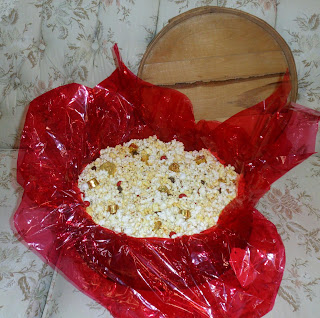
Take one antique wooden cheese box, line it with pretty red cellophane, and fill with goodies. Mine is filled with popcorn, wrapped candies, and a few other surprises.


I put a few stickers on the cellophane wrapper to seal it and then a wide ribbon around the lid. What a fun holiday gift! And, you really didn’t spend very much!

Of course, you can use any old box you might have around, or check out what we have available! We have many different sized boxes that make lovely gifts.

Tuesday, October 26, 2010

Want to Change to Edwardian Decor?

After the heaviness, clutter and dark colors of Victorian interiors, people wanted something new and cheerful. Edwardian style was a breath of fresh air.
If you want the Edwardian look, here are some ideas:

Furniture - Edwardian furniture would have been reproduction furniture to them so you can choose from a range of styles including baroque, rococo and empire. The wing chair is a typical shape. Choose upholstery in chintz, and damasks in pale colors.
Wicker - bamboo and wicker furniture were also introduced in these period. You can still buy good quality wicker furniture today in a range of colors. If you find some in a junk shop and give it a new lease of life by spraying the paint on with a spray gun or aerosol. Don't brush it on as you'll clog up the weave.
Floors - highly polished wood block floors, with oriental rugs, look fantastic in a living room. If you already have wooden floorboards, stain them with an oak-colored varnish. For areas with more wear and tear, go for bricks in a herringbone pattern or red quarry tiles.
Wallpaper - choose wallpapers with a fresh, cheerful feel such as florals with roses, lilac, wisteria, and sweet peas, with trellises, ribbons and bows. Stripes are also typical - go for something simple but rich for dining rooms such as a gold damask and white, and candy stripes for bedrooms. It was considered too much to have both a dado rail and a frieze: most people papered up to the dado rail and then papered or painted the wall above that with plain paper or distemper.
Lincrusta - put up some lincrusta - embossed wallpaper - introduced in 1877. It has an almost rubber-like texture and comes in beautiful art nouveau designs. It is still being made today. It can be painted any color although cream is probably best.
Fireplaces - fireplaces are smaller than Victorian ones. They had splayed sides with projecting iron or copper hoods and decorative tiles. Smaller versions are usually found in the bedrooms.
Color schemes - choose pastel color schemes in the colors of flowers - primrose yellows, leaf greens, the lilac of wisteria, and grey. Living rooms can take darker colors such as dark green for fabrics and cream walls.
Lighting - electric lighting was just beginning to be introduced to the grander homes. Buy fabric lampshades in soft colors with frills and tassels. Use them on wall lights, table lights and even standard lamps. For a central light, look for a pendant fitting in smoked glass. Ceiling roses disguised the wiring for light fittings. Tiffany lamps or reclining female bronze figures are also in keeping.
Windows - hang pieces of lace at the windows and then add plain or floral curtains to co-ordinate with the walls. Alternatively put up a simple striped roller blind.
Cushions - take up embroidery and needlepoint and make some cushions with floral motifs in an art nouveau style.
Pictures - hang pictures on hooks but place them halfway down the wall.
Accessories - add Edwardian-style accessories such as early gramophones (the ones with the conical shells), tiered silver cake stands, and pretty silver photograph frames.
Flowers - echo the wallpaper with your choice of flowers. Try loosely arranged bunches of sweet peas, roses, and lilac. House palms are also typically Edwardian.

Stop by and see us On The Avenue for more great ideas. We'd love to help with your new decorating project!

Monday, October 25, 2010

Rolling Pins - the Latest Collectible

There are two main types of rolling pins - rod and roller. The rod, usually of wood, is the long, thin, handle-less, often tapered cylinder preferred by French chefs, while the roller - more popular in the States - consists of a cylinder that rolls independently of the handles at each end. Though most commonly of wood, rollers have also been made of such materials as glass, marble, Bakelite, metals, plastic, and silicone.


Of course, the rarer an object, the more valuable it is to collectors, and the same rule holds true with the lowly rolling pin. Yellow Ware pins from the 19th and early 20th centuries have sold for up to $1200. (Yellow Ware derives its name from the tinted clays from which it is made.) Knowledgeable collectors are also on the lookout for such types as the old, heavy stoneware pins with advertising under the glaze on the roller. Harker decorated ceramic pins, authentic Shaker double rolling pins, and Depression-glass pins. These all can sell for from several hundred dollars up to $1000 or more for particularly fine examples.


Harker Pottery, a 19th century Ohio company, manufactured both decorative-patterned and hollow pins. The latter could be filled with ice water to keep pastry cool, a prerequisite for tenderness. Today, Harker pins are beloved of collectors and cooks. Other American pin-makers, characteristically entrepreneurial, sold advertising space on ceramic models that were offered as giveaways. Flour mills were the usual advertisers, and yet promotional rolling pins were curiously popular with undertakers.

Glass rolling pins were actually used in early Victorian kitchens. Depression glass rolling pins were made during the 1930s and 1940s in an assortment of colors. Today collectors will find these glass collectibles cost hundreds of dollars. Elaborate, hollow, blown glass rolling pins in clear emerald green, cobalt blue, and milk glass bore enameled decorations and inscriptions. Their nautical embellishments and mottoes hint that they were probably gifts from sailors. Most of these were English.

Here's an interesting use for the rolling pin: “How to Improve the Appearance: Making the Neck Pretty” from the American Woman Magazine, October 1920.

Sunday, August 8, 2010

Saturday's Car Show


We had a great time looking at all the cars in the 5th Annual Grand Car Show on Saturday!

The winner of the Best Car with All Original Parts was parked right in front of Antiques on the Avenue--it was a 1937 Oldsmobile. They borrowed items from the store to make it look like a traveling band from the 30s!