Pages

Friday, February 11, 2011

The Art Nouveau Period

Art Nouveau, 1890-1914, explored a new style in the visual arts and architecture that developed in Europe and North America at the end of the nineteenth century.

At its height exactly one hundred years ago, Art Nouveau was a concerted attempt to create an international style based on decoration. It was developed by a brilliant and energetic generation of artists and designers, who sought to fashion an art form appropriate to the modern age. During this extraordinary time, urban life as we now understand it was established. Many artists, designers, and architects were excited by new technologies and lifestyles, while others retreated into the past, embracing the spirit world, fantasy, and myth.


Art Nouveau was a response to the Industrial Revolution. Some artists welcomed technological progress and embraced the aesthetic possibilities of new materials such as cast iron. Others aimed to elevate the decorative arts to the level of fine art by applying the highest standards of craftsmanship and design to everyday objects. Art Nouveau designers also believed that all the arts should work in harmony to create a "total work of art," or Gesamtkunstwerk: buildings, furniture, textiles, clothes, and jewelry all conformed to the principles of Art Nouveau.

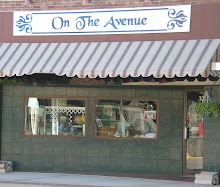
This little Art Nouveau lamp sits on our counter at On The Avenue Antiques...stop by soon to see it and other pieces we have available!


Wednesday, February 9, 2011

Jewelry fit for a Queen

The word "Jewel" is actually a derivative of the French word "jouel", referring to the royal table dressings many years ago in France. Kings, Queens and people of great wealth and political prominence wore fine lacy jewels throughout the 18th and 19th century that were encrusted with fine gems when they came to the dinner tables of court.


Because members of the King's and Queen's courts often had to travel many miles by coach to reach the destination palace, they would take trunks and lockboxes of jewels and their most valuable possessions to be worn in the company of Royalty. During their travels, however, robbery was commonplace. Hence the term "highway robbery", since people were often stripped of their valuables, precious gems and gold. Given this, which became more common than not, wealthy persons began to commission their very best artisan jewels to create exact mold replicas or imitations of the original pieces that they owned. They discontinued the practice of traveling with their authentic gems and would take their replicas or imitation to court so the threat of thievery was that less painful.

Speaking of jewelry, stop by our shop to see what jewels we have available! Our unique pieces may not be as old as the Queen’s gems, but many are just as wonderful And our prices are certainly not “highway robbery!”

Friday, February 4, 2011

Quick Tip #17

Don't use plastic bubble wrap to store silver and ceramics. Heat and humidity can cause permanent discolorations.

Thursday, February 3, 2011

Davenport, Couch, Sofa?


The Davenport is a piece of furniture that gained popularity during the late 19th century and turned into a "generic" term of sorts in some parts of the country by the early 20th century.
In America, it originally denoted a sofa that was rather square looking with a high back and arms. The style, resembling a box in many ways, developed around the turn of the century. It's named for the A.H. Davenport Co. of Boston.

Soon the term came to be used with any sofa or couch, especially in upstate New York and the Midwest. In fact, the term was so popular, that when sofa-beds were first introduced they were dubbed "davenport beds."

But, there is really more to the story. The Kroehler Company of Naperville, IL became the first furniture company to actually patent a sofa containing a hidden mattress and springs in 1909. This type of sofa was so popular, in fact, that the word davenport came to mean any foldout bed.

The British have an even different meaning for davenport—it’s nowhere near a sofa! In fact, their davenport was a small desk, one with a slanted or pull-out top. It also contained a row of drawers down one or both sides.

Originally, the term was used to describe a simple chest of drawers with a swivel top. But as the piece of furniture evolved, it was made with hidden compartments and various cubbyholes of sorts.

This davenport originates from the 1790s. Developed by a furniture firm called Gillow's based in Lancaster, England. The name itself comes from the name of the company's client, believe it or not, a "Captain Davenport." If Captain Davenport wanted this unique piece of furniture for a specific reason, it's lost in history.

Tuesday, February 1, 2011

JFK Library Goes Digital

To celebrate the 50th anniversary of the inauguration of President John F. Kennedy a new digital online archive now gives global access to JFK papers, records, photographs and recordings. Anyone can search, browse and retrieve original documents from the Kennedy Library’s collection,
gaining a first-hand look into the life of President Kennedy and the issues that defined his administration.


The Kennedy digital archive includes 200,000 pages of text, 1,245 individual recordings, 300 museum artifacts, 72 reels of moving images and 1,500 photos. It took more than four years to digitize the documents, photographs, audiotapes and films.

Tuesday, December 7, 2010

Die Cast Toy Sizes

Ever wonder what those size notations on models and small toy cars mean? I found a good explanation for you.

Die-cast toys and models come in various scales, the most popular ones being:

1:12 scale - Very large models usually about 14 or 15 inches long often targeted at adults who are more into serious collecting and high detail. These models are generally much more expensive than the 1:18 models.
1:18 scale - Large models usually about 7 or 8 inches long, often targeted at adults
1:24 scale - Similar to G scale Nascar Cars,which are 1:22.5 scale, extremely popular in America
1:32 scale - Intermediate size most common for vintage cars and model tractors.
1:36 scale - Also made from Maisto, Kinsmart and Welly
1:43 scale - made popular by Dinky and Corgi, the most popular scale with model car collectors internationally -
1:48 scale - aircraft sold in this scale to match plastic model kits
1:50 scale - trucks, buses, construction equipment, promotional models, military vehicles
1:55 scale - used by Siku and the Disney-Pixar Cars Die-Cast Line by Mattel
1:60 scale - the scale of the immensely popular pre-war and post-war military vehicles series by Dinky Toys (including military Dinky Supertoys)
1:64 scale - popular for farm models and American model trucks. Matchbox, Hot Wheels and model Nascar cars are nominally this size.
1:72 scale - A growing scale for military die-cast AFVs
1:76 scale - highly detailed mainly British buses and lorries such as those by EFE and Corgi OOC, and Trax Models in Australia - same as OO scale model trains
1:87 scale - One of the smallest in scale products widely available in the markets. - same as H0 scale model trains

Friday, December 3, 2010

Have any old flags around?


This 1862 Confederate Battle Flag of the 47th Georgia Infantry sold for $59,750 in a recent auction in New Orleans. Historic flags are worth more when they have their history attached (see the plaque on the framed flag).